How to Convert Outlook Email to PDF using PDF.co and Zapier
This Zap converts the HTML body of a new Outlook email into a PDF with PDF.co. It does not automatically include separate attachments. Sender and recipient details, the subject, and timestamps appear only if they are included in the HTML sent for conversion.
Use this workflow when you need a PDF copy of the message body. For a full email archive, first decide which headers and attachments must be retained and handle them explicitly.
Step 1: Open Zapier Account
- Let’s start by opening your Zapier account and creating a Zap.
Step 2: Microsoft Outlook App
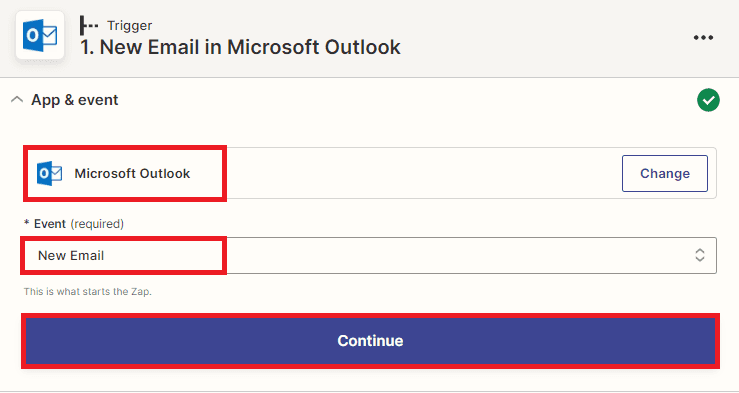
- Next, search and select the Microsoft Outlook app. Then, choose the New Email to trigger when a new email is received in the inbox.
Step 3: Setup Trigger
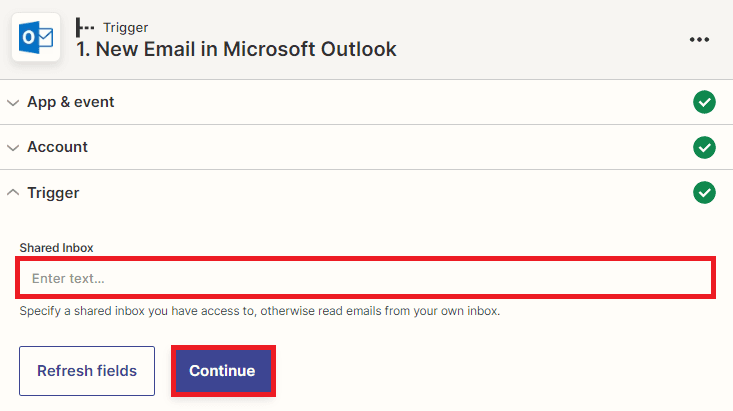
Let’s set up the trigger.
- In the Shared Inbox field, add a specific shared inbox you have an access to get an Outlook email or leave it blank to trigger the read emails from your own inbox directly.
Step 4: Test Trigger
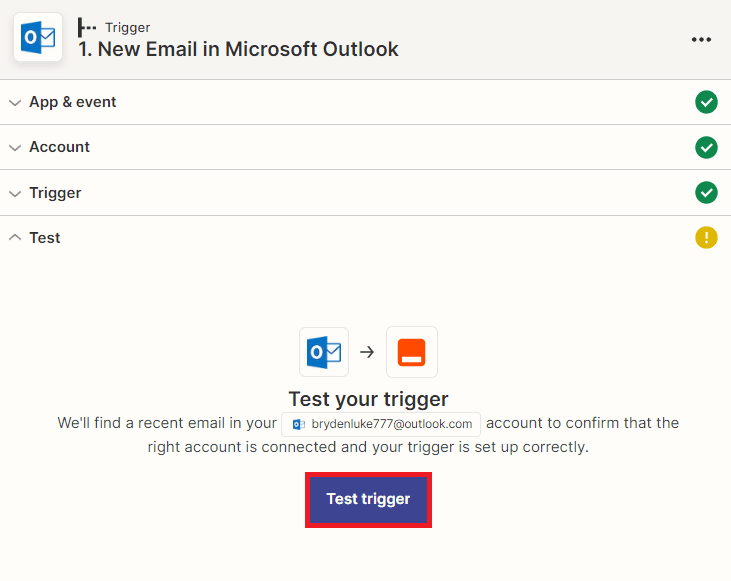
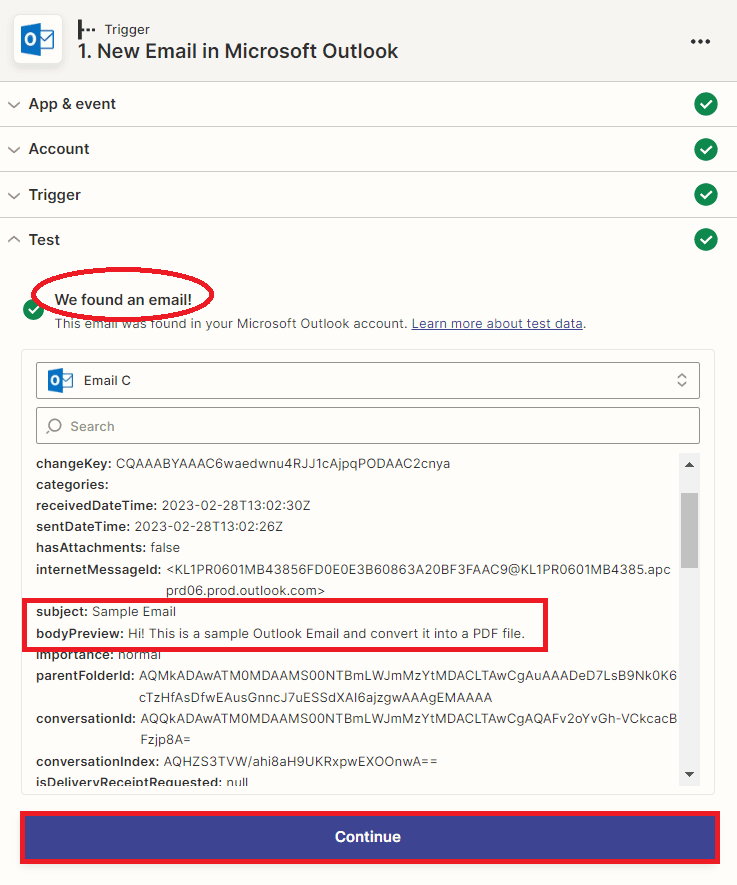
- Now, we will test the trigger to fetch the email message from the Outlook inbox.
Step 5: Test Trigger Result
- Great! We successfully test the trigger and fetch the email message to the Outlook inbox.
In this step, we will add the PDF.co app to convert Outlook email into a PDF.
Step 6: Add PDF.co
- Add PDF.co and select HTML to PDF Converter.
Choose your connected PDF.co account, or follow Zapier’s connection flow to sign in and authorize access. See Connect PDF.co to Zapier for the connection steps.
Step 7: Configure the Conversion
Configure the PDF.co action:
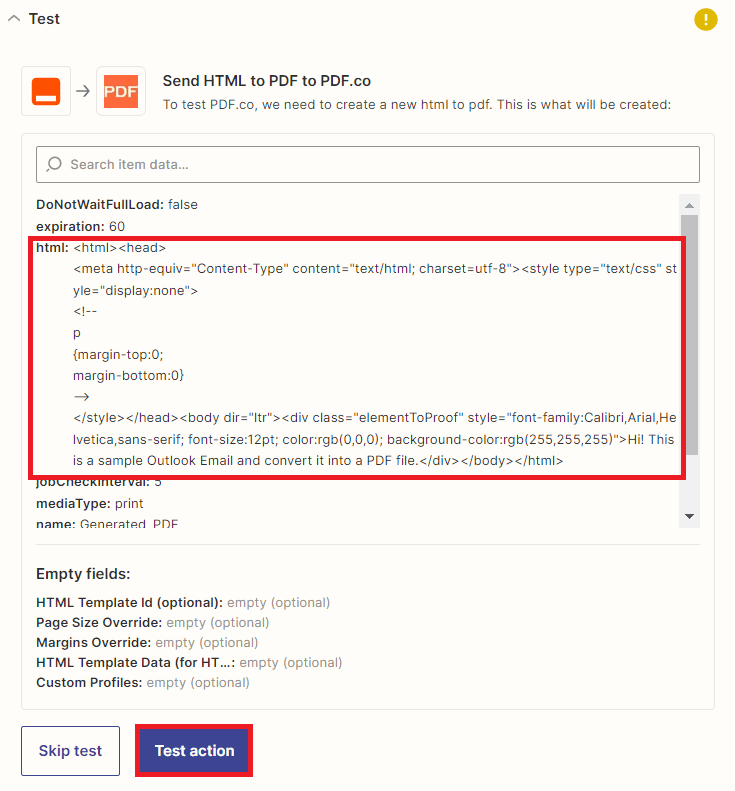
- HTML or URL Input: Map Body Content from the tested Outlook email after confirming that it contains HTML.
- Name: Enter your preferred output filename, including
.pdf. - Page Orientation, Page Size, and Custom Margins: Adjust these for your document or use the defaults.
Use the HTML version of the message body when available. For a plain-text-only message, place the encoded text inside an HTML document and preserve its line breaks before conversion.
If the PDF must display the subject, sender, recipients, or received time, add those mapped values explicitly to the HTML. Include the timezone when displaying timestamps. Encode plain-text values before inserting them into HTML.
Test a message containing links and inline images. Inspect the PDF for missing images or layout changes; images referenced through inaccessible URLs or email-only attachment references may not render.
Separate file attachments require their own processing or storage step. Mapping the message body does not include them automatically.
Step 8: Test Action
- After setting up the configuration, test the action to send a request to PDF.co.
Step 9: Check and Save the Result
Check the PDF.co action for errors, then open the generated PDF. Confirm that the message body is present and readable, links work as expected, and any explicitly included header fields are correct.
Also test an email containing an attachment to confirm the workflow’s scope: the body conversion alone does not add that attachment to the PDF.
Add a storage or file-delivery step if you need the generated PDF to remain available after its temporary output URL expires.
Step 10: HTML to PDF Output
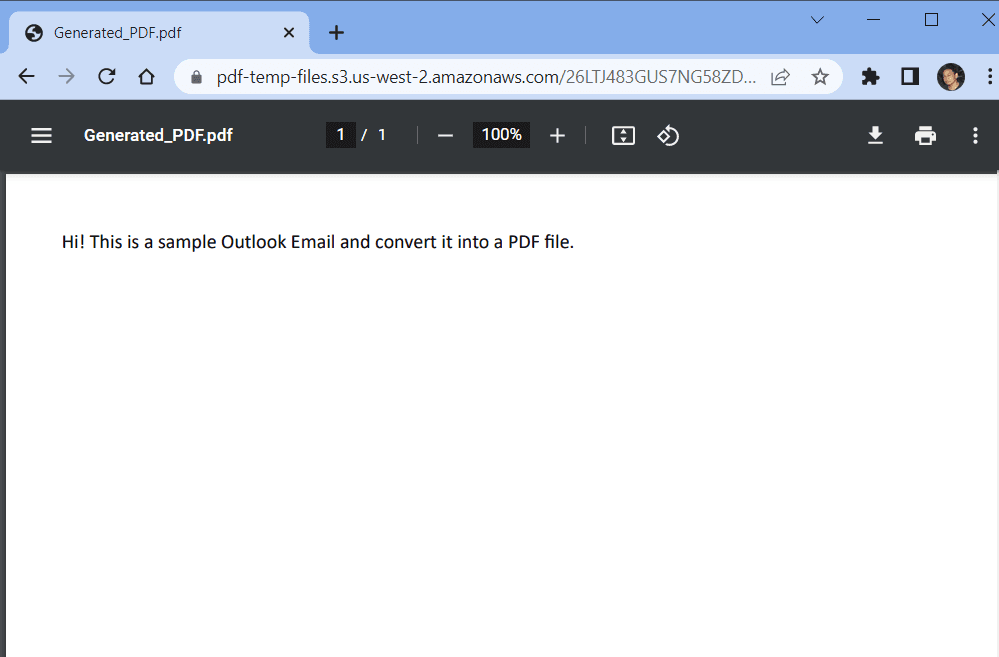
- Here’s the generated PDF output from an Outlook email.
This tutorial taught you how to convert an Outlook email into a PDF using Zapier. You also learned how to use the PDF.co HTML to PDF API to convert HTML or URL into a PDF.
Video Guide
Related Tutorials