How to Convert Gmail Email to PDF using PDF.co and Make
This Make scenario watches Gmail and converts an email’s HTML body into a PDF with PDF.co. It is useful for saving the visible message content.
The steps below do not automatically include separate file attachments or add the sender, subject, and timestamp unless those values are included in the HTML sent for conversion.
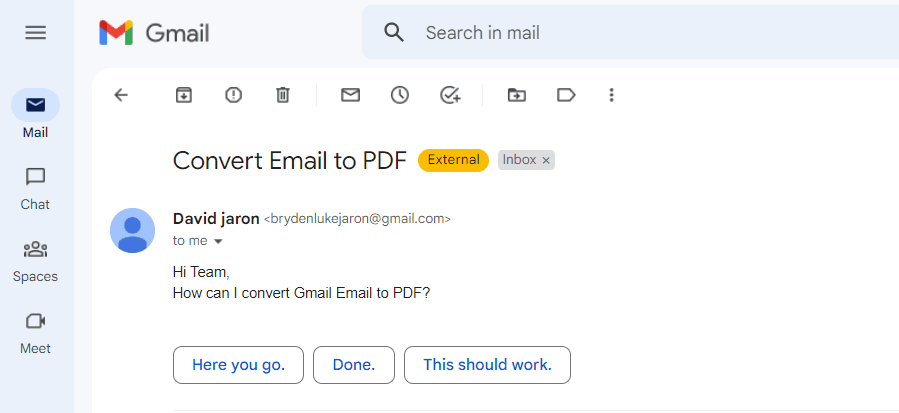
Step 1: Create a New Scenario
- To begin. First, log into your Make account and click on the Create a New Scenario button.
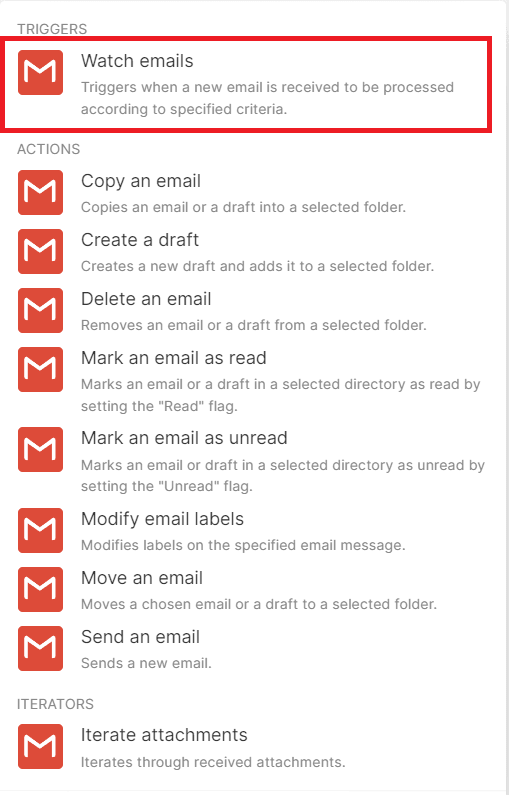
Step 2: Gmail and Watch Emails Module
- Next, search and select the Gmail module. Then, choose the Watch emails as a trigger.
Step 3: Gmail Configuration
- In the Folder field, select the specific folder you want to convert when a new email arrives.
- For the Filter Type field, let’s use the Simple Filter.
- For the Criteria field, select the type of emails you’d like to convert.
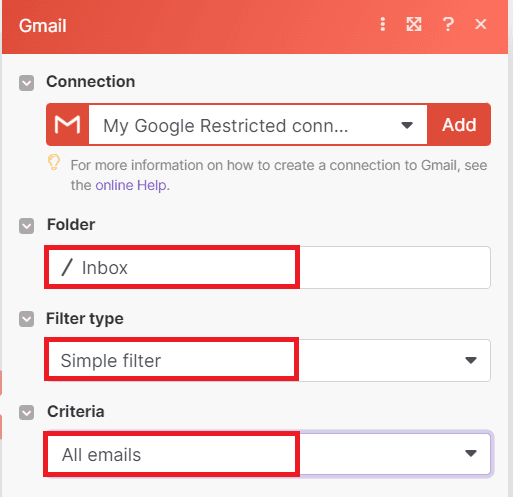
After setting up the configuration, run the scenario to fetch the data from Gmail.
Step 4: Add PDF.co and HTML to PDF Module
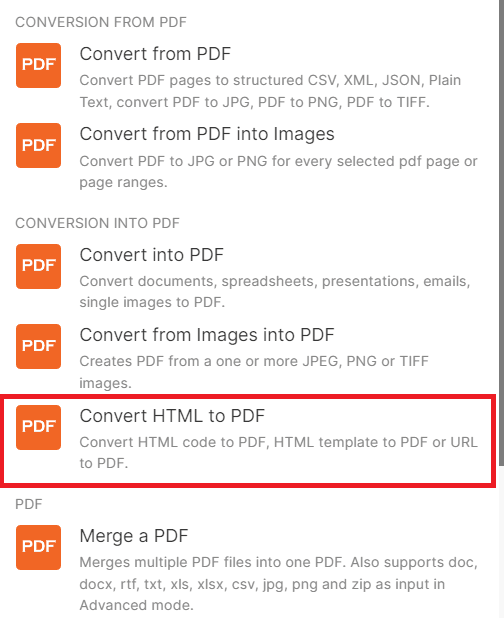
- Let’s add another module and select PDF.co. Then, choose Convert HTML to PDF.
Step 5: Configure PDF.co
Inspect a test result from Gmail before configuring the conversion. Set Gmail’s Content format to Full content so the scenario retrieves the message content rather than only metadata.
Configure PDF.co → Convert HTML to PDF:
- Convert Options: Select HTML to PDF.
- Input HTML Code: Map the email’s HTML body from the Gmail output.
- Output File Name: Enter your desired PDF filename.
- Export Type: Select Download a File if the next step will upload the PDF to storage.
Check that an HTML body is available. For plain-text-only messages, build an HTML document containing the encoded message text, preserving its line breaks, before conversion.
If the PDF must display the sender, subject, or date, explicitly include those mapped values in the HTML. Treat message content as untrusted input. Encode plain-text values before inserting them into HTML; apply encoding to those values rather than the complete HTML markup.
Test an HTML email and a plain-text email. Use representative formatting and images, then inspect the generated PDFs before enabling the scenario.
Step 6: Run Scenario Result
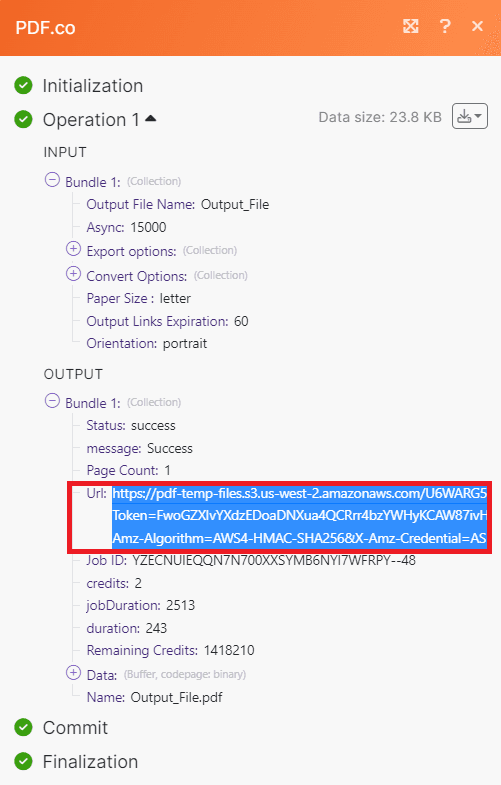
- Great! The scenario runs successfully, kindly copy the URL and paste it into your browser to view the output.
Step 7: Check and Save the Generated PDF
Open the generated PDF and compare it with the source email. Check the message text, formatting, images, and any header fields you explicitly included.
Images referenced through unavailable URLs or email-only attachment references may not render. Confirm the actual output rather than assuming it matches Gmail’s display.
Save the PDF to your chosen storage destination before its temporary output URL expires. With Export Type set to Download a File, map the PDF.co output Data into the storage upload’s file-content field and provide a .pdf filename.
Separate email attachments require their own handling. If your saved record must include them, add and test an attachment-processing path. Converting the HTML body alone does not capture those files.
In this tutorial, you learned how to convert Gmail email to PDF using Make. You learned how to use the PDF.co Web API to convert HTML to PDF.
Related Tutorials