Webpage to PDF in PHP using PDF.co Web API
2 Minutes Read
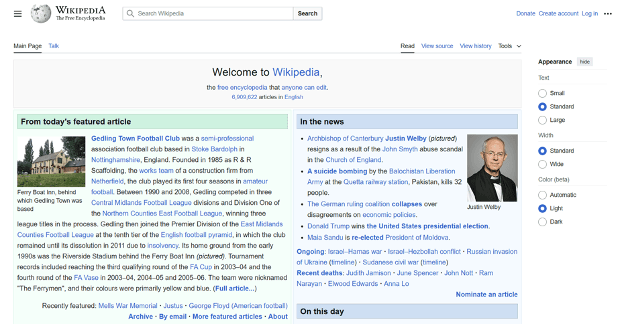
In this tutorial, we will guide you through the process of converting a webpage to a PDF using the PDF.co Web API with PHP. As an example, we will use the Wikipedia main page to demonstrate the conversion into PDF format.
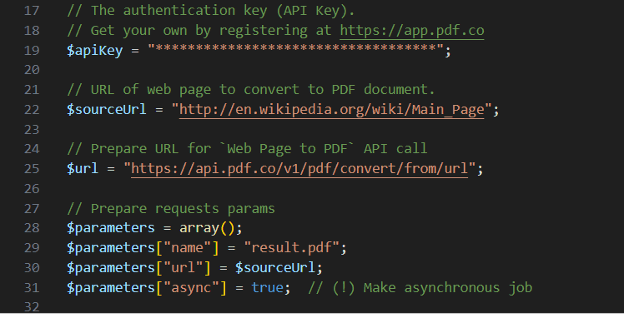
Step 1: Copy and Review the Source Code
- Copy the Sample Code: Open the PHP webpage-to-PDF sample and paste it into your editor. It should call
/v1/pdf/convert/from/url. Configure the source webpage URL and output PDF filename for your conversion. - Add Your API Key: Log in to your PDF.co account and retrieve your API Key from your dashboard. Replace the placeholder in the sample code with your actual API key.
- Input the Web Page URL: Input the web page URL you wish to convert into PDF format.
- Choose the execution mode: If using asynchronous processing, retain the returned job ID and check its status. Download or open the output only after
success. Stop onfailedoraborted, and set a polling deadline and network request timeouts. Asynchronous processing does not eliminate all timeout risks.
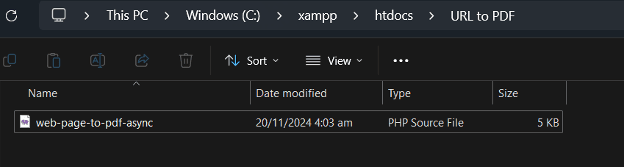
Step 2: Save the PHP and HTML File in the Directory
Once you've edited the code, save the PHP and HTML file in the appropriate directory for local hosting.
- For XAMPP Users: Save the file in the
/htdocsdirectory. - For WampServer Users: Save the file in the
/wwwdirectory.
Saving the file in these locations ensures that it’s accessible from your local server.
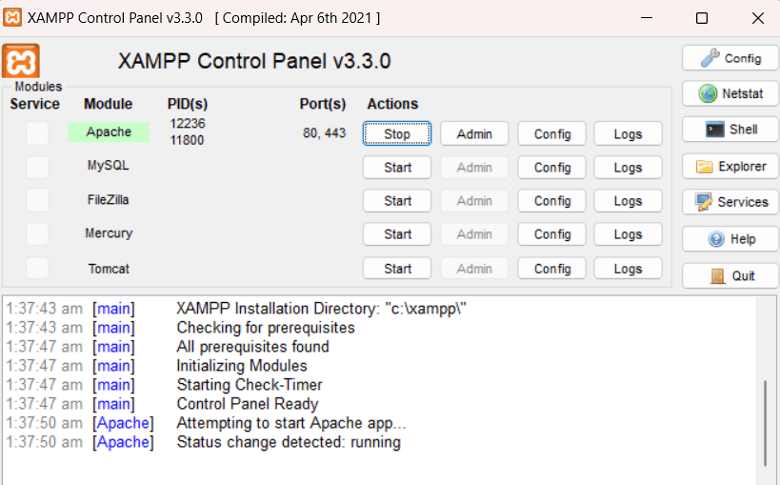
Step 3: Start the Apache Module
To execute your PHP script, ensure that your Apache server is running.
- Open the XAMPP or WampServer control panel.
- Click Start next to the Apache module to activate the server.
Step 4: Run the PHP Program Locally
Now, let's run the program on your local machine:
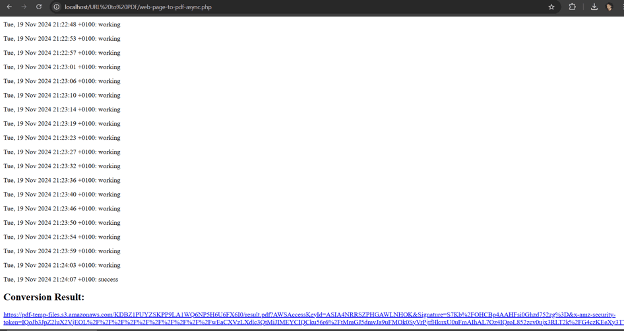
- Open your browser and type
localhost/your-folder-name/your-file.phpin the address bar.- Example:
localhost/URL to PDF/web-page-to-pdf-async.php
- Example:
- Once the program runs, it will return an output URL.
- Click on the output link to download the PDF file.
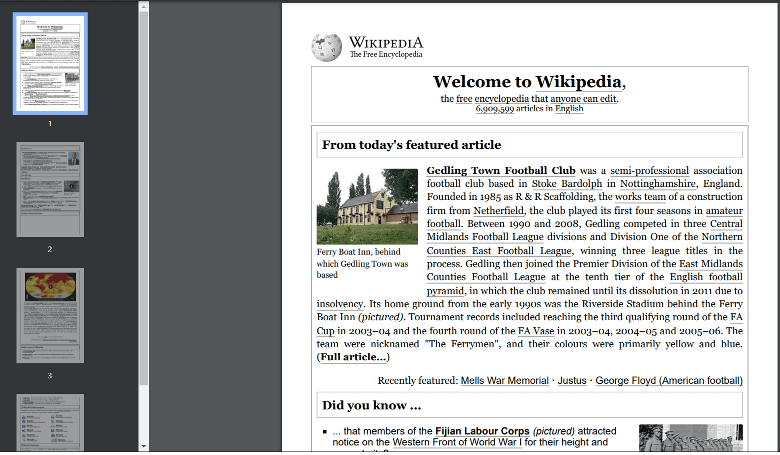
Step 5: Access the Generated PDF Result
Open the generated PDF to view the result.
In this tutorial, you learned how to convert a webpage to PDF in PHP using PDF.co Web API. You also learned how to set up the environment to run the program in your localhost.
Video Guide
Related Tutorials